
Pergola Ideas for Coastal NC Backyards
Pergola planning ideas for shade, airflow, and structure · 9-minute read
Place the structure around the hours you want to use the patio.
Sun angle, roofline, wind, views, furniture clearance, and future lighting all shape the right pergola footprint.
A pergola is the single most effective way to create a shaded outdoor room on a coastal North Carolina property without enclosing the space entirely. It defines a dining area, shelters an outdoor kitchen, or frames a seating zone around a fire feature — all while letting coastal breezes pass through and preserving the open-air feeling that makes outdoor living in this part of the state worth the investment.
The challenge in coastal NC is that pergolas must handle conditions most inland structures never face: sustained salt air exposure, tropical storm wind loads, intense UV degradation, and humidity levels that accelerate rot and corrosion. A pergola designed for a backyard in Raleigh will not perform the same way in Wilmington or Surf City. This guide covers the pergola ideas, materials, and design decisions that actually work along the coast — based on structures we have designed and built across the NC 210 corridor from Smithfield to the shore.
Why Pergolas Work So Well in Coastal NC
Coastal North Carolina's climate makes a compelling case for pergola structures over fully enclosed additions or screened porches. The region experiences mild winters, warm springs, and long summers — meaning outdoor spaces are usable eight to ten months of the year. A pergola extends that usability into the hottest months by providing shade without trapping heat the way a solid-roof structure does.
The coastal breeze factor is significant. Properties in Wilmington, Carolina Beach, Hampstead, and Surf City benefit from consistent onshore wind patterns during summer afternoons. An open pergola channels those breezes through the living space, creating natural cooling that a screened porch blocks. When combined with a ceiling fan and landscape lighting, a well-designed pergola becomes the primary living space from May through October.
Pergola Styles That Suit Coastal Properties
The Classic Open-Rafter Pergola
The traditional pergola design — four or more posts supporting parallel rafters with no solid roof — remains the most popular style for coastal NC backyards. The open-rafter design provides dappled shade (typically 50 to 60 percent coverage depending on rafter spacing and orientation), allows rain to pass through, and creates minimal wind resistance during storms. East-west rafter orientation maximizes midday shade. North-south orientation provides more even light throughout the day but less protection during peak sun hours.
For properties on larger lots in Hampstead, Leland, and Wallace, freestanding open-rafter pergolas over paver patios create a defined outdoor room without the cost or permitting complexity of an attached structure. Standard sizing runs 12x14 to 16x20 feet — large enough for a dining table, seating, and circulation space.
Louvered Roof Pergolas
Louvered pergolas use adjustable aluminum slats that rotate between fully open and fully closed positions. Open, they function like a traditional pergola with airflow and dappled light. Closed, they create a solid, waterproof roof that sheds rain through integrated gutters and downspouts. Motorized versions operate by remote control or smartphone, and some models include rain sensors that close automatically.
This is the premium option for homeowners who want a true all-weather outdoor room. The installed cost is significantly higher than a traditional pergola, but the flexibility is substantial — particularly for protecting outdoor kitchen appliances, electronics, and upholstered furniture from sudden coastal rain.
Pergolas with Shade Sails or Retractable Canopies
A middle-ground approach combines a standard post-and-beam pergola structure with removable shade sails or retractable fabric canopies. The pergola provides the architectural framework, and the fabric provides adjustable shade coverage. Sails can be removed before hurricane season and reinstalled in spring. Retractable canopies mount on tracks and slide open or closed as conditions change.
This style works particularly well for properties in Carolina Beach and Surf City where homeowners want shade control without the higher cost of a motorized louvered system. Marine-grade fabrics (Sunbrella and similar) resist UV degradation and mildew in coastal humidity.
Attached Pergolas and Pavilions
Pergolas attached to the home's exterior wall or roofline create a seamless transition between indoor and outdoor space. The attachment point uses a ledger board fastened to the house framing — the same technique used for deck construction. Attached pergolas are structurally efficient (the house carries one side of the load) and visually cohesive, but they require a building permit in all three coastal counties (New Hanover, Brunswick, and Pender) because they modify the existing structure.
Pavilions are fully roofed structures — essentially a pergola with a solid shingled or metal roof. They provide complete weather protection and support ceiling fans, lighting, and even televisions. The trade-off is reduced airflow and higher wind load. Pavilion posts must be engineered for coastal wind requirements, typically requiring deeper footings and larger post dimensions than an equivalent open pergola.
Material Choices for Coastal Conditions
Pressure-Treated Pine
Pressure-treated southern yellow pine is the most affordable structural material for pergolas in coastal NC. It machines easily, accepts stain and paint well, and with proper maintenance (re-stain or seal every two to three years) lasts 20 to 25 years. The downsides are maintenance frequency and the tendency to warp, check, and split over time — especially in the humidity and temperature swings near the coast. For budget-conscious projects, pressure-treated pine delivers solid performance at the lowest entry point.
Western Red Cedar
Cedar contains natural oils that resist rot, insect damage, and fungal growth without chemical treatment. It weathers to a silver-gray patina if left unfinished, or it can be stained to maintain its warm reddish-brown tone. Cedar is lighter than pine (easier to work at height), dimensionally more stable, and requires less frequent maintenance. It costs approximately 30 to 50 percent more than pressure-treated pine but outlasts it in coastal conditions with less upkeep.
Aluminum
Powder-coated aluminum is the most durable pergola material for properties within 10 miles of the ocean. It does not rust, rot, warp, split, or attract insects. Salt air has zero effect on properly coated aluminum. Maintenance consists of occasional washing. Modern aluminum pergola systems replicate wood grain textures convincingly enough that many homeowners cannot distinguish them from real wood at conversational distance. Aluminum also enables the louvered roof systems described above — a mechanism that would not be practical in wood.
Fiberglass
Fiberglass pergola columns and beams are the newest option in the coastal market. Like aluminum, fiberglass is impervious to salt air, moisture, and insects. It can be painted any color, holds its shape indefinitely, and never requires staining or sealing. The weight is comparable to aluminum. Fiberglass is currently the highest-cost material option, but its zero-maintenance profile makes it increasingly popular for second homes and vacation properties along the coast where owners are not present for regular upkeep.
Engineering for Coastal Wind Loads
This is where coastal NC pergola construction diverges most significantly from inland work. The North Carolina Building Code designates the coastal zone (including all of New Hanover, Brunswick, and Pender counties) as a high-wind area with design wind speeds of 130 to 150 mph depending on proximity to the ocean.
What this means practically: pergola posts must be anchored to concrete footings that extend below the frost line (typically 12 inches in coastal NC, but footings for wind resistance often go 36 to 48 inches deep). Post-to-footing connections use heavy-gauge galvanized or stainless steel brackets — not the lightweight post bases used inland. Beam-to-post connections require through-bolts or engineered connectors rather than simple lag screws. Rafter-to-beam connections get hurricane ties.
The engineering adds cost — typically $1,500 to $3,000 for a stamped wind load analysis and connection details on a pergola that would not require engineering in the Piedmont. But it is non-negotiable. A pergola that lifts off its posts during a Category 1 storm becomes airborne debris that damages the house, vehicles, and neighboring properties. We design every pergola we build to meet or exceed the wind load requirements for its specific location, whether the structure is in downtown Wilmington or on the exposed coast at Surf City.
Integrating Pergolas with Other Outdoor Living Elements
A pergola rarely stands alone in a well-designed outdoor space. The most compelling projects we build in coastal NC combine the pergola with complementary elements that create a complete outdoor room.
- Paver patio base: Every pergola needs a finished floor. A custom paver patio beneath the structure establishes the room's footprint, manages drainage away from footings, and creates a level, durable surface for furniture and foot traffic.
- Outdoor kitchen integration: Pergolas over outdoor kitchens provide shade for the cook and shelter grills, countertops, and storage from direct sun exposure that degrades finishes and overheats equipment.
- Lighting design: String lights, recessed downlights in beams, and low-voltage landscape lighting around the perimeter transform a pergola into a usable evening space. Planning conduit runs during construction avoids visible wiring.
- Drainage coordination: Pergola footings can interfere with existing yard drainage systems. Footing excavation must account for underground drain lines, downspout tie-ins, and grading patterns.
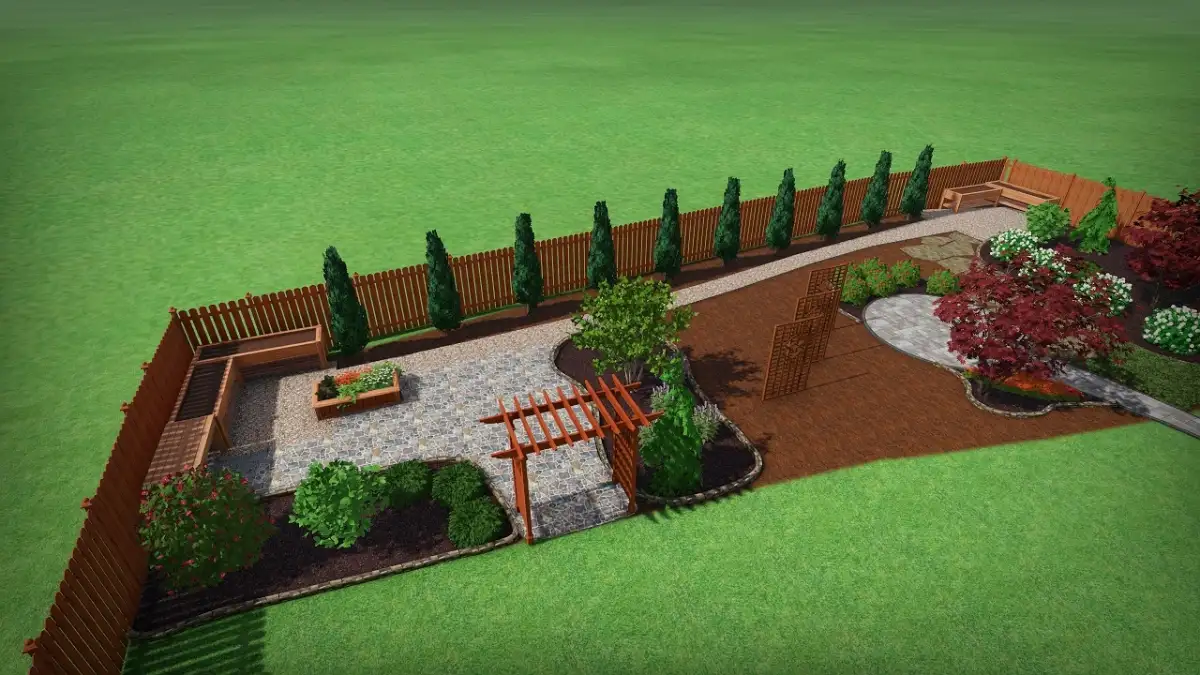
Our 3D design process models the pergola within the context of the entire outdoor space — showing how shade falls at different times of day, how the structure relates to the house and property lines, and how it connects visually with patios, kitchens, and landscape elements. This prevents the common mistake of building a beautiful pergola in the wrong location.
Cost of Pergolas in Coastal NC
Pergola costs in the Wilmington and coastal NC market reflect both material choices and the engineering requirements specific to the coast. Here are typical ranges for installed pergolas including footings, posts, structure, and basic finish:
- Pressure-treated pine (12x14): $8,000 to $12,000 installed
- Western red cedar (12x14): $12,000 to $18,000 installed
- Powder-coated aluminum (12x14): $14,000 to $22,000 installed
- Motorized louvered aluminum (12x14): $20,000 to $35,000 installed
- Fiberglass (12x14): $18,000 to $28,000 installed
Larger structures, attached designs requiring ledger connections, integrated lighting, and ceiling fans add to these figures. The engineering and permitting component — required for most coastal installations — typically adds $1,500 to $3,000. These are 2026 prices for the Wilmington, Smithfield, and greater coastal NC corridor.
Frequently Asked Questions
How much does a custom pergola cost in Wilmington NC?
Custom pergolas in the Wilmington and coastal NC area typically cost $8,000 to $25,000 installed, depending on size, material, and features. A standard 12x14 pressure-treated wood pergola starts around $8,000 to $12,000. Aluminum pergolas with motorized louvered roofs range from $15,000 to $30,000 or more. These figures include footings, posts, and finish work but not additional features like lighting, fans, or integrated drainage.
Do pergolas need a permit in New Hanover County?
Freestanding pergolas under 200 square feet with open roofs generally do not require a building permit in New Hanover County. Pergolas over 200 square feet, attached pergolas, and structures with solid roofing typically require a permit and must meet coastal wind load requirements. Brunswick and Pender counties have similar thresholds. Always verify with your local building department before construction.
What is the best pergola material for coastal NC?
Aluminum is the most durable pergola material for coastal NC due to its complete resistance to salt corrosion, rot, and insect damage. Pressure-treated pine is the most affordable option and performs well with regular maintenance. Cedar offers natural rot resistance and a premium look. Fiberglass is emerging as a zero-maintenance premium option at a higher price point.
Start Your Pergola Project
Whether you want a simple shade structure over your patio dining area or a fully integrated louvered pergola over a complete outdoor kitchen, ENC Designs handles pergola projects from concept through construction. Our 3D design process lets you see exactly how the structure looks on your property — scale, proportions, shade patterns, and material finishes — before any footings are poured. We serve Wilmington, Smithfield, Carolina Beach, Surf City, Hampstead, Wallace, Leland, and the surrounding coastal NC communities.
Book your Visionary Consultation or call us at (919) 634-2359.